Silicon Carbide-based Nitride Bonded Silicon Carbides (NBSIC) are used for their good thermal, mechanical and wear resistance attributes. Although heating at high temperature and pressure can produce sintered pure silicon carbide, the process commercially viable. High-density silicon carbide materials are produced by introducing a bonding aid that produces a secondary phase. The thermomechanical properties are then often limited by the properties of the secondary bond. For example, the maximum operating temperature of Silicon Impregnated SIC (SISIC/RBSIC) Bonded Silicon Carbide is 1375°C, the melting point of silicon.
Production
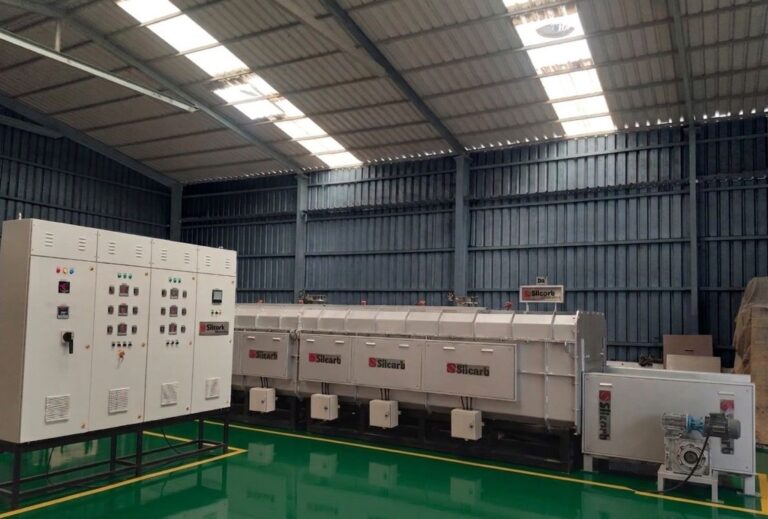
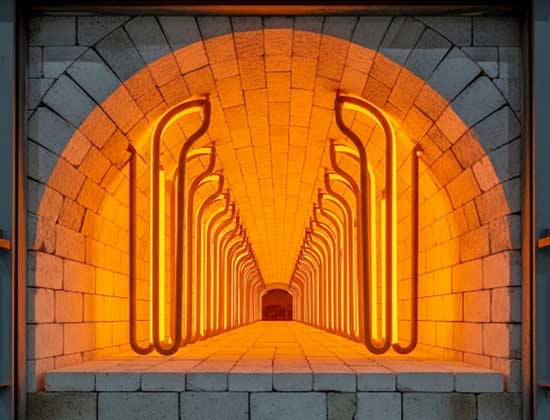
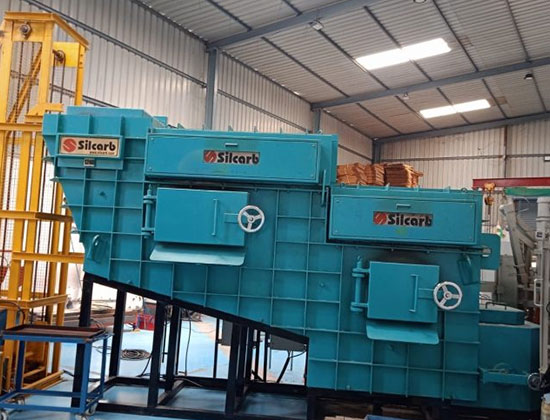
Silcarb manufactures its NBSIC in a very controlled electric furnace where temperatures are very accurately maintained and pressures are regulated through the cycle. Silcarb has a battery of furnaces in its Bangalore plant, which manufactures a number of shapes, sizes, and profiles of nitride-bonded silicon carbide.
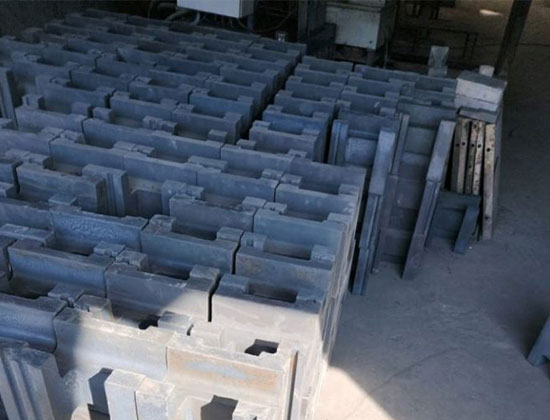
Silcarb manufactures these Kiln Furniture by a number of forming processes:
Slip casting
Extruding
Uni Axial Pressing
Isostatic Pressing
The required forming process is adapted for specific products.
Key Properties
The properties of nitrogen-bonded silicon carbide suit many harsh service conditions:
Good wear resistance
Good abrasive resistance
High load carrying capacities up to 1650 °C. Load-carrying capacities at elevated temperatures far outperform other oxide-bonded silicon carbide products.
High Thermal shock resistance, low thermal expansion coefficient and high thermal conductivity. NBSIC can thus go through several thermal cycles without deforming, cracking, etc
Good chemical resistance to acids, molten salts and halogens. NBSIC may be attacked by oxidizing agents and strong bases such as iron oxide and sodium hydroxide.
NBSIC can be used for molten metal contact without any wettability
At elevated temperatures, NBSIC is a semiconductor
Silcarb makes its NBSIC in various percentages of silicon. The lowest percentage of being 10%, going all the way up to 38% silicon with additions of aluminum oxides for molten metal applications.
Typical Properties
Table 1. Typical mechanical and thermal properties for silicon nitride (20-30%) bonded silicon carbide (70-80%).
Property
Density
2.69
Porosity (%)
14
Young’s Modulus
80
Bending Strength (MPa)
38
Thermal Expansion Coefficient (x 10-6/ºC)
2.7
Thermal Conductivity (W/mK)
32
Maximum Operating Temperature (ºC)
1600
Note:- The properties of NBSIC Ceramics manufactured by Silcarb vary based on application. Do get in touch for specific figures.
Applications
Silicon Nitride Bonded Silicon Carbide Bricks
Exploiting the material’s excellent stability and mechanical strength, nitrogen-bonded silicon carbide bricks are used in a range of process furnaces and kilns, such as the sidewalls of aluminum melting pots, the lower stack of blast furnaces, and as kiln furniture.
Cast Refractories
Nitrogen-bonded silicon carbide is commonly found as a cast refractory for use under severe service conditions in place of alloys or other refractory materials. Near net shapes can be designed to reproduce the metal parts. The high hardness and abrasion resistance of the material mean that components should be designed to avoid grinding or other finishing operations.
Applications of cast refractories exploit the physical and chemical properties of the material and the ability to form the material into complex shapes.
Uses include:
Cyclone liners for abrasion resistance used in minerals plants, coal plants and in chemical and paper industries.
Slurry pump parts for mineral processing and abrasive chemical industries.
Coal burner, exhaust for use in the power plants.
Corrosion-resistant components for a chemical plant.
Pump components, piping liners, valve liners, spigots and nozzles.
Non-ferrous metal contact applications.
Kiln furniture for high-temperature applications
Product Range
Current products produced by Silcarb in NBSIC
NBSIC Beams
NBSIC Plates(batts)
NBSIC Bricks for Primary Aluminum Electrolytic Cell
NBSIC Liners
Complex NBSIC Shapes
NBSIC Spray nozzles
Additional Information
Get in touch for any shapes or sizes of NBSIC products; we can make a single piece for you if needed.
We have an in-house die and tool design, manufacturing team and can make any complex shapes you need.
Nitride Bonded Silicon Carbide (NBSIC) Kiln Furniture is used in high-temperature industrial furnaces and kilns where extreme thermal shock resistance, high load-bearing capacity, chemical inertness, and long operational life are required. These products are particularly suited for aluminum melting, non-ferrous metal handling, abrasive environments, and aggressive chemical processing applications.