loader image
Mosi2 Heating Elements

MoSi₂ Cold Bent Heating Element

MOSIL-Cold-Bent-01

MOSI2 Cold Bent Element

In the cases where electrical connections cannot be done above the roof, bent elements are used. Sometimes the furnace is too high to allow installation of elements suspended from the roof, this is due to the limitation regarding the maximum permitted heating zone length. So, in such scenarios, it is necessary to install elements with bent terminals or heating zones. Most elements are bent in the cold end, but they can also be bent in the hot section. This allows the installation of several rows of such heating elements on a wall of the furnace and it is also possible to control the power at different levels inside the furnace.

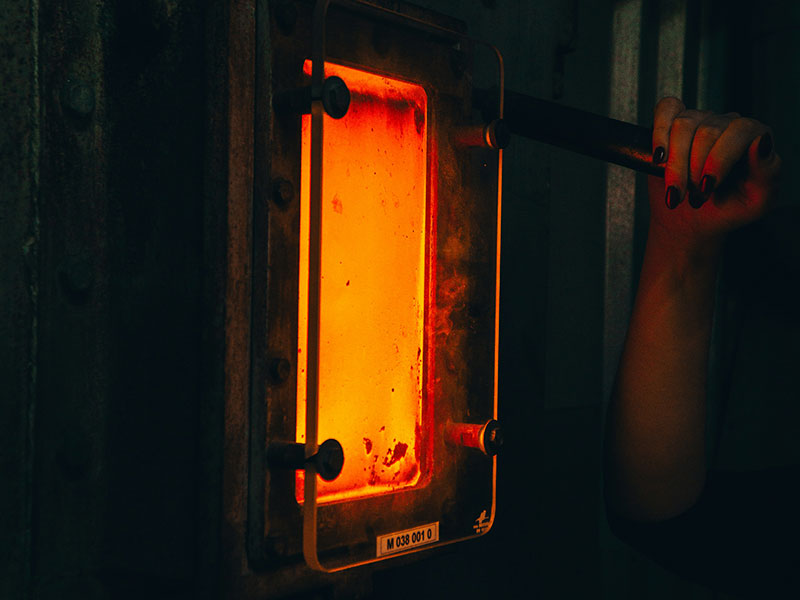
MoSi₂ Cold Bent Heating Elements are specifically designed for furnaces where conventional roof-mounted straight elements are not feasible due to height constraints, installation limitations, or furnace geometry. By bending the element at the cold end—or when required, within the hot zone—these elements enable flexible mounting configurations while maintaining stable electrical and thermal performance.

Cold bending ensures that terminal connections remain accessible and protected, while allowing precise positioning of the heating zone inside the furnace chamber. This design supports multi-level heating layouts and zonal temperature control, making it ideal for large or vertically extended furnaces.

KEY SPECIFICATIONS

MAXIMUM TEMPERATURE
Up to 1800°C
(depending on atmosphere and element design)
MATERIAL
Molybdenum Disilicide (MoSi₂)
CONFIGURATION
Cold Bent (Bent Terminals) Optional Hot-Zone Bending
Mounting Orientation
Wall-mounted or side-mounted configurations

Applications

MoSi₂ Cold Bent Heating Elements are commonly used in high-temperature furnaces where installation from the furnace roof is impractical or impossible. These include tall furnaces, furnaces with restricted overhead access, and applications where heating zones must be distributed vertically along furnace walls.

By enabling multiple rows of heating elements at different heights, cold bent elements allow independent power control across furnace zones. This improves temperature uniformity, process flexibility, and energy efficiency in applications such as ceramic sintering, glass processing, electronic ceramics, metallurgy, and specialty material heat treatment.

RELATED POSTS

1620-degrees-centigrade-downdraft-shuttle-kiln
csr_update
new-design-shaft
Defence inspection before despatch