Industrial Furnaces

Industrial Electric Forging Furnaces

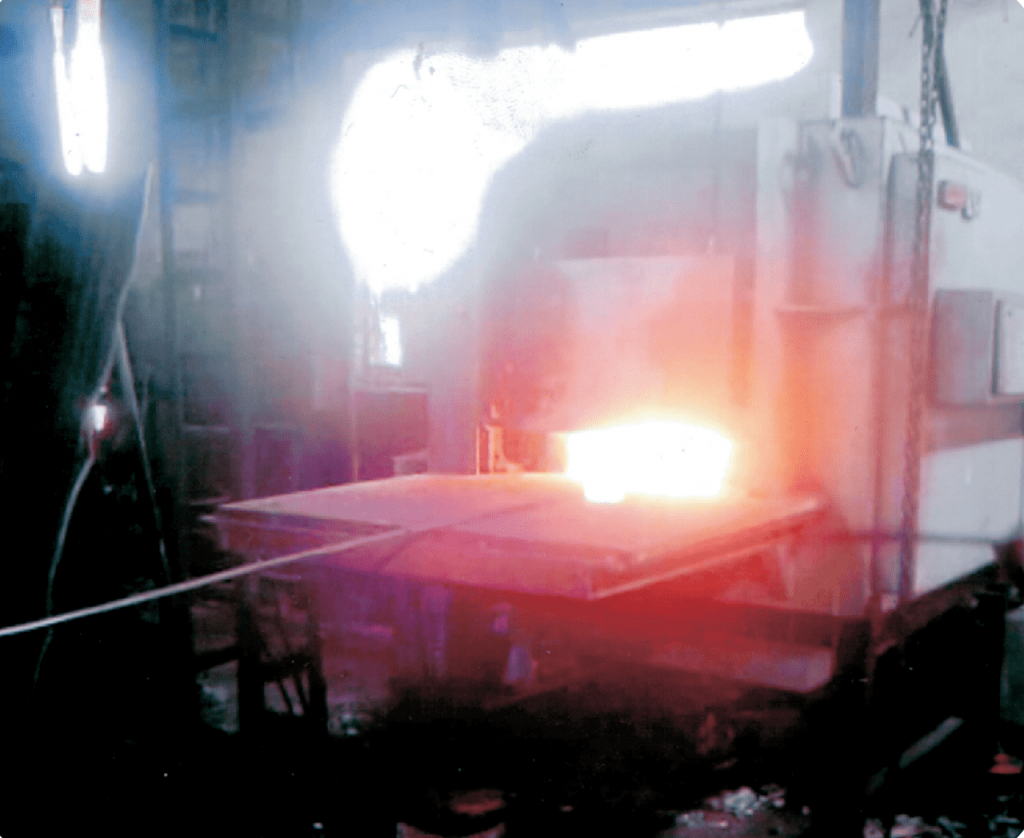
Electric-Forging Furnace 1

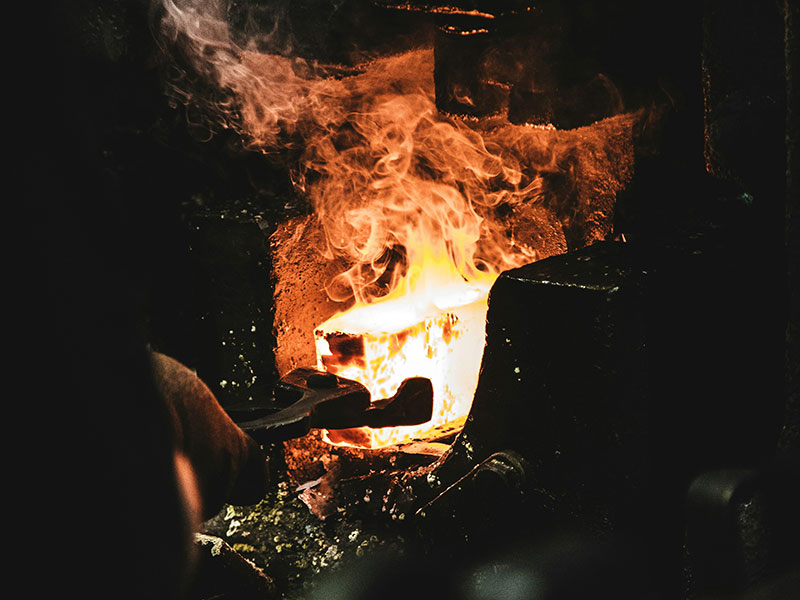
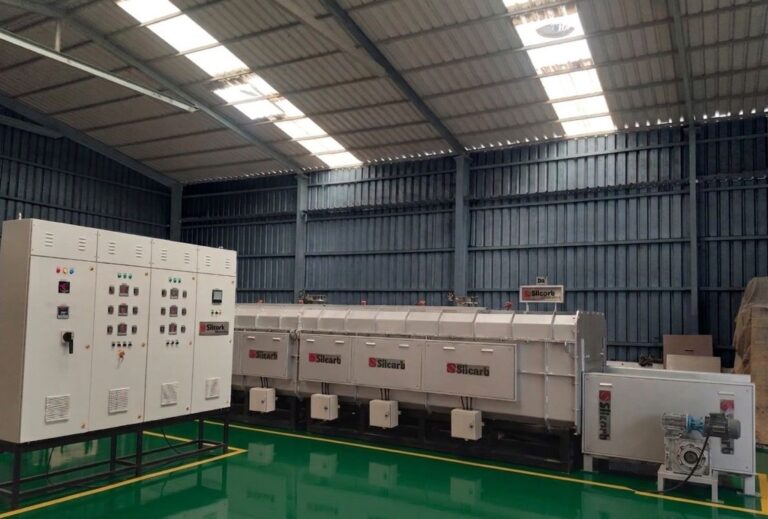
Silcarb manufactures Electric Forging Furnaces for Ferrous castings and Aluminium Castings.

An electric furnace in which heat is generated by conductors that resist the passage of a current through them. Resistance furnaces are widely used in heat treatment, forging, for heating prior to pressure shaping, and to dry or melt materials. Resistance furnaces are used extensively because of their numerous advantages. Any temperature up to 3000°C can be obtained in the furnace chamber. Articles can be uniformly heated either by appropriately locating the heating elements along the walls of the furnace chamber or by means of forced circulation of the furnace atmosphere.

Automatic control of the power and, consequently, of the temperature conditions in such a furnace is easily implemented. Resistance furnaces are readily mechanized and automated, thus alleviating the work of personnel and facilitating the inclusion of such furnaces in automatic transfer lines. In addition, they are compact. Such furnaces provide a secure environment for various processes. A resistance furnace may be well sealed, in which case the heating is carried out in a vacuum, or it may contain either a gaseous medium that prevents oxidation or a special atmosphere for chemical case hardening, for example, for carburization or nitriding.

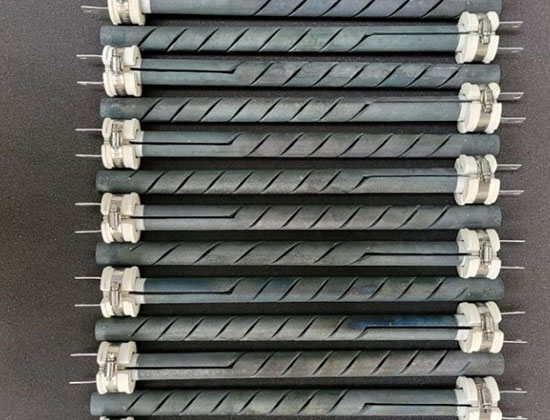
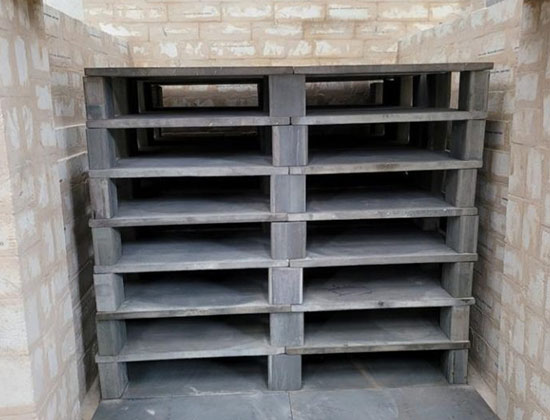
Most resistance furnaces are of the indirect type. In indirect-heat resistance furnaces, electric energy is converted into heat when current flows through the heating elements. The heat is transmitted to the articles to be heated by radiation, convection, or conduction. Such a furnace consists of a working chamber formed by a lining composed of a layer of firebrick that supports both the articles to be heated and the heating elements and that is insulated from a metal casing by a layer of heat insulation. The parts and mechanisms that operate in the chamber, as well as the heating elements, are made of heat-resistant steels, refractory steels, or other refractory materials.

silcarb manufactures a highly efficient rotary hearth furnace at it’s plant in Bangalore.Silcarb uses high efficiency burners with its own burner tubes etc.The refractory used are best in class making this a very robust design.

A complete solution including robotics can be offered for loading and unloading the job etc. Very accurate temperature measurements with optical pyrometers are offered.

Silcarb manufactures three types of Forging Furnaces (for both Ferrous and Non-ferrous)

  • Continuous Pusher Type Furnaces
  • Batch Type (Chamber Furnaces)
  • Rotary Hearth Furnaces

Forging
Forging furnace

KEY SPECIFICATIONS

Furnace Type
Electric Forging Furnace
Heating Method
Resistance Heating
Maximum Temperature
Up to 3000°C
Furnace Configurations
Continuous Pusher Type, Batch Type (Chamber Furnaces), Rotary Hearth Furnaces

Applications

Industrial Electric Forging Furnaces are used for heating ferrous and non-ferrous castings prior to forging, pressure shaping, and heat treatment processes. These furnaces are suitable for automated forging lines, rotary hearth applications, and batch or continuous operations requiring uniform heating, accurate temperature control, and safe, energy-efficient operation.

RELATED POSTS

revb-furnace
1650-degrees-centigrade-electric-kiln
carbon-fibre-line
Ceramic Support Pillars