Mosi2 Heating Elements

MOSIL (MoSi₂) Heating Elements

Mosil straight 1

Silcarb Manufactures  MoSi2 heating element as straight and bent elements in a wide range of sizes and shapes.

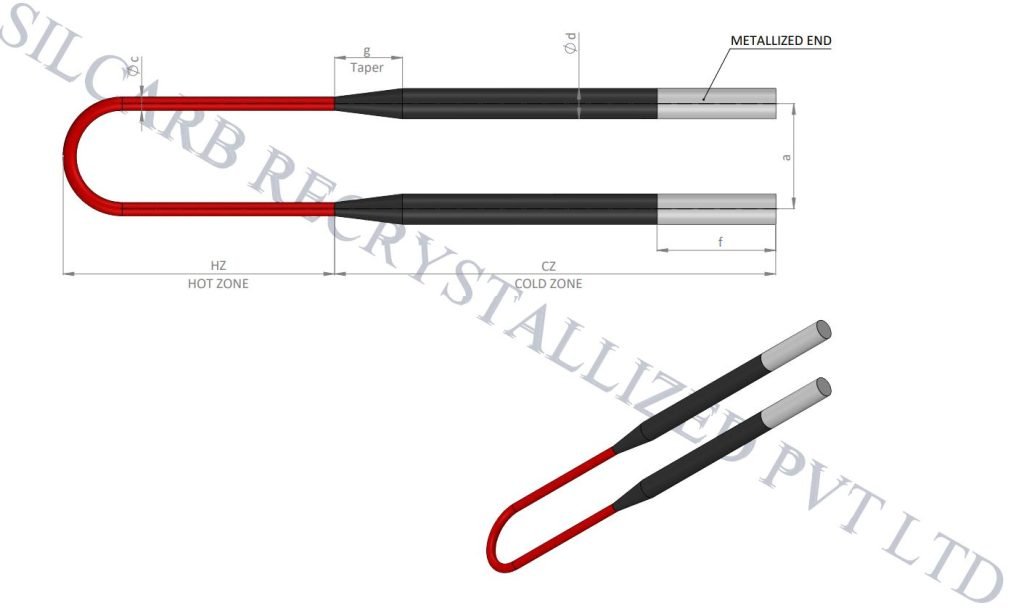
Two-shank MoSi2 heating element with straight terminals are defined by:

  • Heating zone diameter, c, mm
  • Terminal diameter, d, mm
  • Terminal length, CZ, mm
  • Heating zone length, HZ, mm
  • Center distance between shanks, a, mm

A two-shank U-shaped element (MOSIL (MoSi2)Straight Elements) is the most commonly used design. The heating zone is welded to terminals that are typically twice the diameter of the heating zone. Straight MOSIL (MoSi2) heating elements are manufactured to industry-standard resistance values. The same spacing, power ratings, and voltages can be used as with other molybdenum disilicide elements. The maximum length of the heating zone is determined by the temperature of the element. Sintering and heat treatment on electronic ceramics, structural ceramics, magnetic materials, flameproof materials, glass, metallurgy, and other applications are possible.
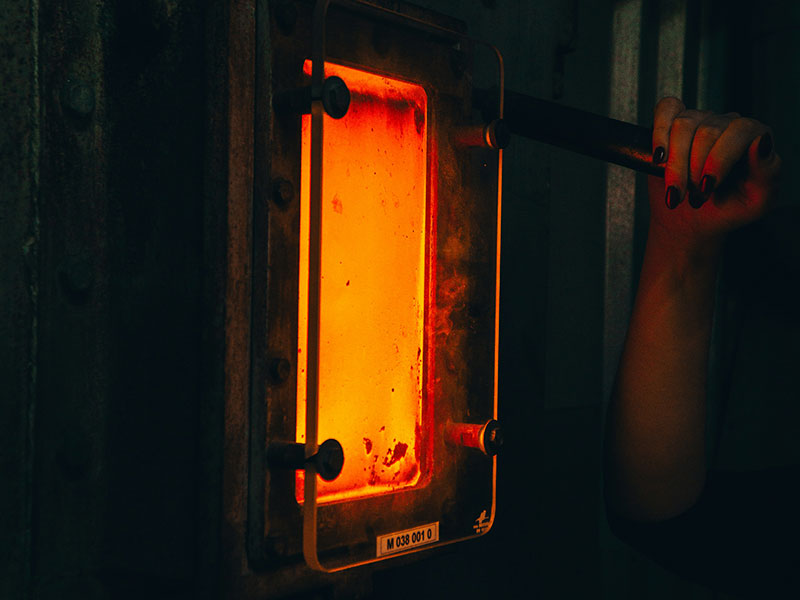
MOSIL (MoSi₂) heating elements are designed for ultra-high temperature electric furnace applications where stable resistance characteristics and long service life are critical. The two-shank U-shaped configuration ensures uniform heat distribution while maintaining cooler terminal zones, thereby improving energy efficiency and furnace lining life. The welded construction between the heating zone and terminals provides mechanical robustness and consistent electrical performance across repeated thermal cycles.

KEY SPECIFICATIONS

MAXIMUM TEMPERATURE
Up to 1800°C
(depending on atmosphere and configuration)
MATERIAL
Molybdenum Disilicide (MoSi₂)
CONFIGURATION
Two-Shank U-Shaped (Straight Terminals)
APPLICATIONS
High-Temperature Industrial Furnaces

Applications

MOSIL (MoSi₂) heating elements are widely used in high-temperature furnaces operating in air or controlled atmospheres, particularly where temperatures exceed the operating limits of silicon carbide heating elements. These elements are commonly applied in sintering and heat treatment of electronic ceramics, structural ceramics, magnetic materials, flameproof materials, glass processing, and metallurgical applications.

RELATED POSTS

hybrid-aluminum
csr_update
1620-degrees-centigrade-downdraft-shuttle-kiln
electric-shaft-melter